
The Chongyang Festival, also known as the Double Ninth Festival, falls on the ninth day of the ninth month of the traditional Chinese calendar. It is a time to show respect and care for older people.
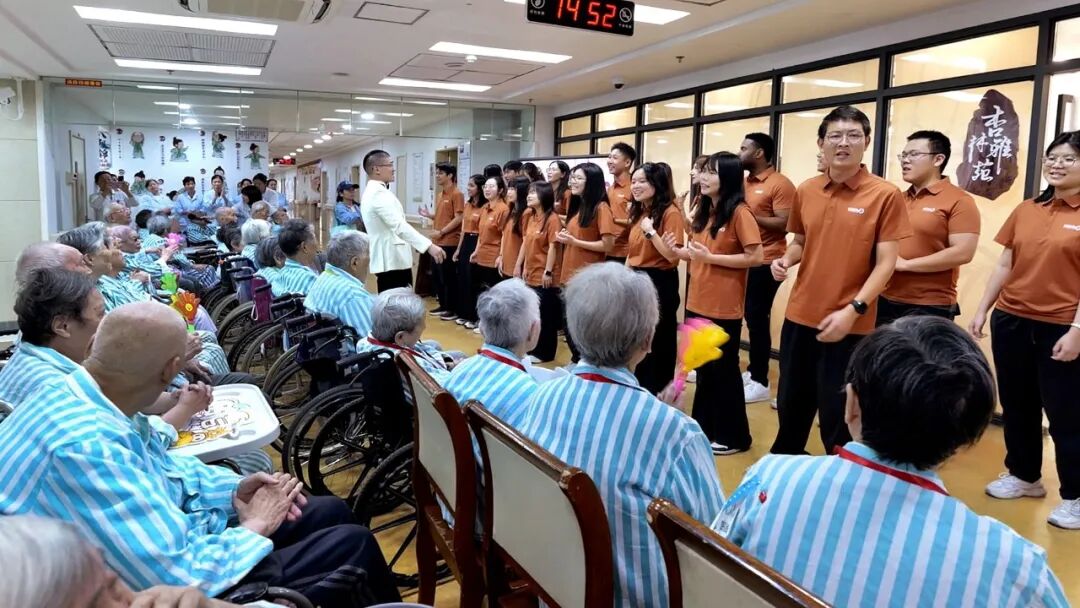
On October 16, ahead of this year’s festival, the International Education College at Shanghai University of Traditional Chinese Medicine (SHUTCM) organized a volunteer visit to Shanghai Huangpu District Geriatric Nursing Hospital. Members of the “Lumen Vitae” (“Light of Life”) choir, made up of faculty members and students, joined the visit to perform for older patients with cognitive impairment.
More than 20 international students from countries including Malaysia, Zimbabwe, Italy, Vietnam, Indonesia, New Zealand, and Haiti took part. They performed for more than 20 patients with mild to moderate cognitive impairment. The patients had an average age of over 85, with the oldest aged 99. Many of them also had speech or mobility difficulties.
Preparations began a month before the visit. Faculty members and students selected Chinese songs familiar to older Chinese audiences. The choir rehearsed together at least twice a week, while smaller groups practiced in their spare time.
The performance featured several well-known Chinese songs. Students from Malaysia and Vietnam sang “Honghu Shui Lang Da Lang” (Waves on Honghu Lake), a tune that resonated with the older patients. The folk song “Mo Li Hua” (Jasmine Flower) and the love song “Tian Mi Mi” (Sweet as Honey) were also warmly received. As the familiar melodies rang out, some patients gently moved their hands to the rhythm, while others hummed along and smiled.
A lively African drumming performance by students from Zimbabwe had patients clapping along to the beat, with laughter filling the room. To close the performance, all participating faculty members and students joined in singing “Wo Zhi Zai Hu Ni” (I Only Care About You) and “Wo He Wo De Zu Guo” (My Motherland and Me).
“Seeing their smiles reminded me of my own grandparents. It warmed my heart,” said a Malaysian student performer. The student added that bringing joy to the patients through music made the visit meaningful.

After the performance, the hospital’s traditional Chinese medicine physicians led patients and students through a series of acupressure exercises. They demonstrated how to apply pressure to specific points on the body and explained how the techniques are traditionally used to relieve neck and shoulder discomfort.
A head nurse then showed the patients and students how to perform hand exercises, including stretching fingers, making fists, and rotating wrists. The international students helped the patients follow along, offering assistance as needed.
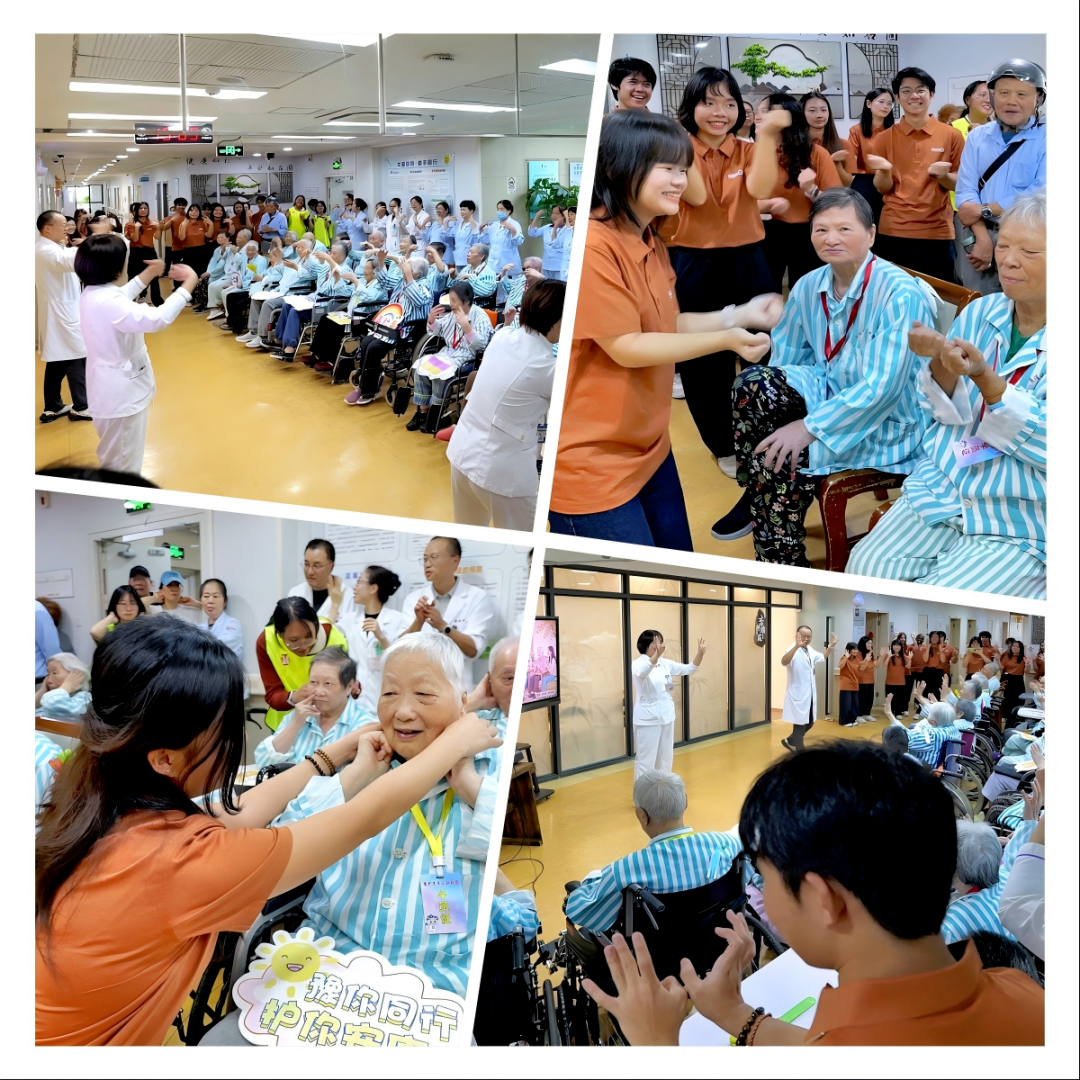
The visit gave students an opportunity to interact directly with older patients and see how music, patience, and personal attention could contribute to compassionate care. They also learned more about the Chinese tradition of respecting and caring for older people while bringing festive cheer to the patients.
SHUTCM’s International Education College emphasizes both professional training and compassion in medical education. The college plans to offer more opportunities for international students to volunteer in local communities, experience Chinese culture, and gain practical insight into patient care.